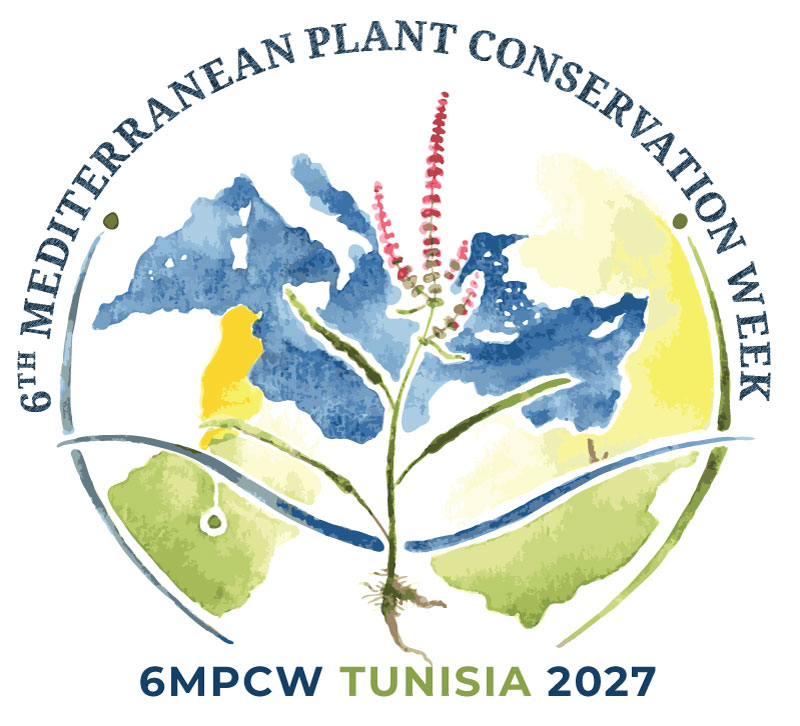
6th Mediterranean Plant Conservation Week
Bridging Continents: From a shared biogeographical legacy to a shared plant conservation responsibility
- Hotel Regency Tunis, Tunisia
- April 19-23, 2027
The 6th Mediterranean Plant Conservation Week (6MPCW) will be held from April 19 to 23, 2027, at Hotel Regency Gammarth in Tunis, Tunisia. This congress provides a platform for researchers, conservation practitioners, nature managers, and enthusiasts to exchange knowledge and experiences, united by a shared commitment to safeguarding Mediterranean wild plants and their habitats.
MPCW is an ongoing forum that promotes a proactive and collaborative approach to the conservation of Mediterranean flora. It brings together practitioners, key stakeholders in sustainable development and plant scientists from Europe, North Africa, Macaronesia and the Middle East. Held every two years, the initiative has already convened several successful editions across the Mediterranean, including in Montenegro – Ulcinj (2016), Malta – La Valletta (2018), Greece – Chania (2021), Spain – Valencia (2023) and Cyprus – Limassol (2025).
This 6th edition (6MPCW) will be held for the first time on the southern shore of the Mediterranean, in Tunisia. Tunisia’s strategic location at the crossroads of Africa, Europe and Asia will not only encourage but also facilitate the participation of stakeholders from North Africa and the Middle East, regions that have often been underrepresented in previous events.
This choice will strengthen the connection between the Eurasian and African continents, which share a deep historical and biogeographical heritage. The conference aims to advance plant conservation efforts in response to the urgent challenges facing our shared natural and cultural heritage, climate and ecosystems by fostering cooperation among countries and pooling expertise. These challenges require collective action, mutual learning and solidarity.
For these reasons, the conference’s motto is: “Bridging Continents: From a shared biogeographical legacy to a shared plant conservation responsibility”.
The 6MPCW will be spearheaded by the Institut National Agronomique de Tunisie (INAT, University of Carthage), and co-organized by CIHEAM-MAICh, IUCN, CEPF, Franklinia Foundation and the GENMEDA Network.
Important Dates
Abstract Submission Deadline: December 15, 2026
Abstract Acceptance Notification Deadline: January 20, 2027
Early-bird Registration Deadline: January 31, 2027
Conference dates April 19-23, 2027
Sponsorship Package
Sponsoring MPCW offers a valuable opportunity to connect with an international audience of researchers, academics, conservation professionals, policymakers, and other stakeholders committed to plant preservation and biodiversity. Sponsors can enhance their visibility and strengthen their association with scientific research, environmental sustainability, and conservation initiatives through exposure across multiple communication channels and conference media.
With Platinum, Gold, and Silver sponsorship packages, organisations can choose the level of participation that best aligns with their objectives and gain opportunities to promote their work, engage with the scientific community, and support a meaningful cause. If you are interested in becoming a sponsor, please contact 6mpcweek@gmail.com for further information.
About Tunisia
Tunisia provides a unique opportunity to promote greater participation from North Africa and the Middle East and advance a shared responsibility for Mediterranean plant conservation.
Accessible
Tunisia’s strategic location at the crossroads of Africa, Europe and Asia makes it an ideal setting to bring together stakeholders from across the Mediterranean and strengthen connections between the northern and southern shores
Flora
Tunisia, a small gem of the Mediterranean, enjoys a predominantly Mediterranean climate, with mild, wetter winters and warm, sunny summers, particularly across its northern and coastal regions. Its diverse geography gives rise to a remarkable climatic gradient, from the humid Mediterranean north with its lush forests and wetlands, to the warmer, drier central regions and the vast arid landscapes of the south.
Organizers


Partners and Sponsorships


Professional Conference Organizer

Frequently Asked Questions
What is the Target Audience?
The conference is open to anyone involved in documenting, promoting, and conserving native Mediterranean flora, such as:
- Researchers and academics
- Policymakers and governmental institutions
- Civil society organizations, NGOs and international organizations
- Practitioners
- Protected area managers
- Botanic garden and Seed bank personnel
- Students and early-career scientists/conservationists
- Private sector stakeholders
What are the Conference Objectives?
The conference’s main goal is to strengthen plant conservation efforts across the Mediterranean biogeographic region by fostering collaboration, knowledge exchange and capacity building among key stakeholders, in line with the conference motto: “Bridging Continents: From a shared biogeographical legacy to a shared plant conservation responsibility”
Guided by a spirit of solidarity and inclusiveness, the conference embraces the principle of “leaving no one behind”, ensuring that conservation efforts actively support and include countries facing conflict, instability or humanitarian crises.
More specifically, the conference aims to:
1. Promote a shared understanding of the conservation challenges affecting Mediterranean flora, particularly endemic, rare and threatened plant species.
2. Foster stronger cooperation and solidarity between countries across the Mediterranean, including those facing conflict, instability or humanitarian crises, to ensure more inclusive and equitable conservation efforts.
3. Facilitate the exchange of scientific knowledge, practical experience, and best practices in plant conservation through participatory approaches, such as citizen science.
4. Emphasize the significance of scaling up in situ conservation efforts, particularly for forest ecosystems and tree species.
5. Support the integration of plant conservation into policy frameworks, governance systems and protected area management, including in fragile and resource-limited settings.
6. Highlight the importance of biocultural heritage, including traditional knowledge and ethnobotanical practices, as part of a shared Mediterranean legacy.
7. Strengthen the capacity of stakeholders, including strong representation from practitioners, civil society organizations, and actors operating in challenging contexts, to design and implement effective, participatory, and well-governed conservation actions.
What are the expected outcomes?
The conference is expected to deliver the following outcomes:
1. Strengthened regional dialogue, networks and partnerships reflecting a shared commitment to plant conservation across continents and cultures, with greater inclusion of stakeholders from underrepresented and crisis-affected countries, in line with the principle of “leaving no one behind.
2. Increased awareness of the importance and urgency of conserving Mediterranean plant diversity, particularly tree species and forest ecosystems.
3. Improved knowledge sharing and dissemination of best practices adapted to diverse contexts, including fragile and high-risk environments, and promoting the role of citizen science in data collection and monitoring.
4. Enhanced capacity of participants, including strong representation from practitioners, to implement inclusive, resilient, participatory and well-governed conservation actions.
5. Identification of priority actions and strategic directions for future plant conservation initiatives and strengthened conservation governance in the region.
6. Promoted inclusive approaches to conservation, such as recognizing traditional knowledge and engaging local communities in citizen science initiatives.
7. Stronger integration of scientific, policy, and community-based approaches to plant conservation across the Mediterranean region.
8. Greater visibility and recognition of young conservationists and emerging actors in the field, especially those from regions facing structural challenges.
9. All accepted contributions (oral presentations and posters) will be eligible for submission to a dedicated special issue of the Mediterranean Botany Journal (Scopus and ISI-indexed), contributing to the dissemination of knowledge and best practices in Mediterranean plant conservation.
What is the Young Conservationist Award?
A dedicated initiative may be developed to recognize the commitment and achievements of young plant conservationists in the Mediterranean region. This could take the form of an award, scholarship, grant, internship opportunity, or other type of support linked to the conference. The aim would be both to recognize promising work and to encourage the next generation of conservation leaders
We are privileged to recognize three remarkable scientists who have not only advanced the field of plant conservation but have also inspired others to join in this vital mission. Their work has strengthened conservation efforts, deepened our understanding of Mediterranean biodiversity, and fostered a more sustainable future for generations to come.
How can I be informed about the conference latest updates?
Follow us on Facebook and Twitter (X).